Someone at a barbecue asks what you do. What comes out of your mouth?
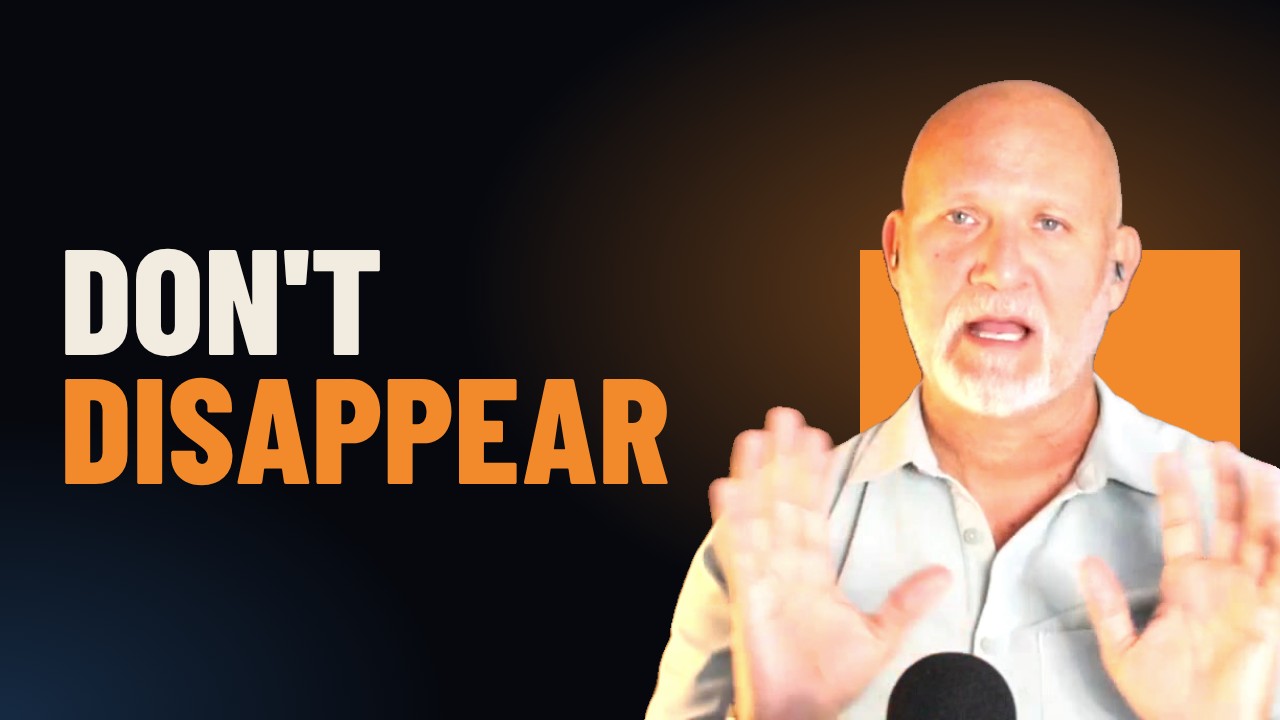
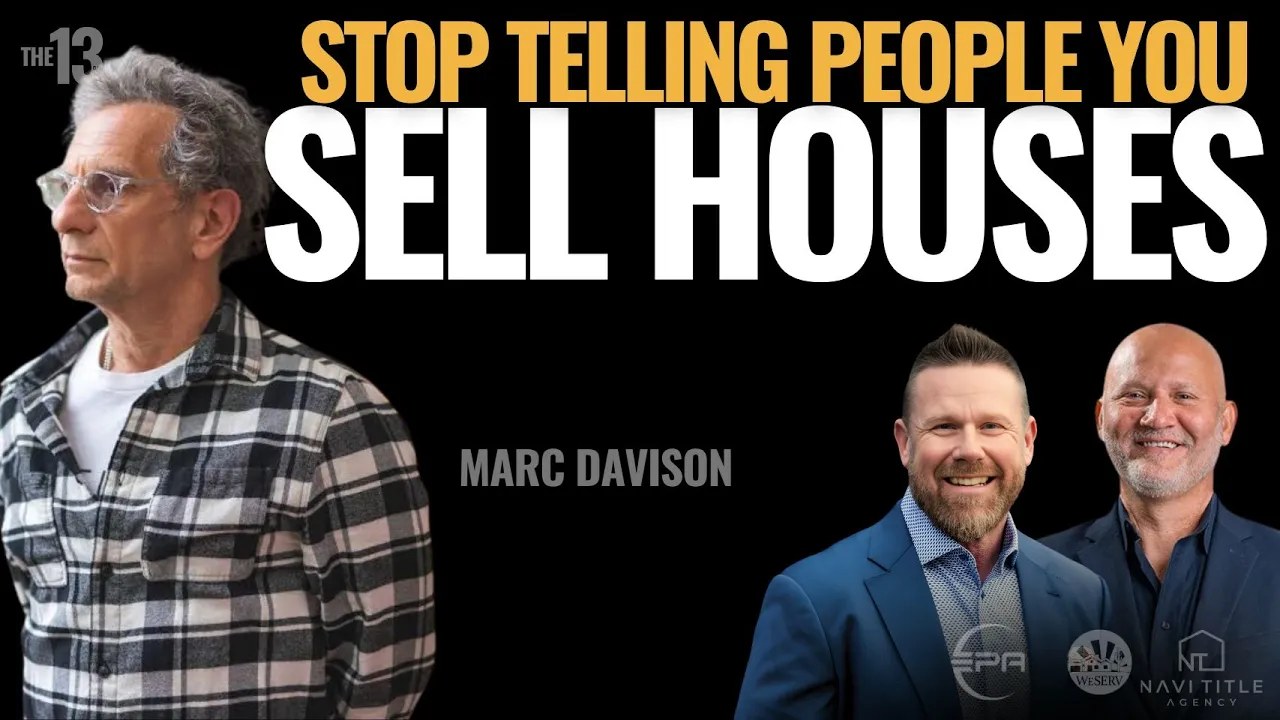
For most agents, it’s three words: “I sell houses.” Marc Davison, branding expert and co-founder of 1000watt, says that answer is a big part of why the public doesn’t think we’re worth what we charge. And after this conversation, I can’t unhear it.
Marc Davison is a branding expert and co-founder of 1000watt, and he has worked in real estate since the late 1990s. In this segment, he put the whole industry on trial for how it tells its own story. If you’ve ever felt like clients don’t understand what you actually do, this one will hit home. It starts with your real estate agent value proposition, and most of us have never really defined ours.
Watch or Listen to the Full Episode
What a Unique Value Proposition Actually Is
Marc started with a definition, because he says a lot of people confuse a unique value proposition with a unique selling proposition.
In his words, the unique value proposition is “a very singular, almost molecular thing that’s part of a business or brand that is the only reason why you actually will buy it.”
His example was Volvo. “If you’re looking for speed or performance or style, you’re not buying a Volvo. You buy a Volvo for one reason. It’s a box that you are safe in.”
Safety is Volvo’s unique value proposition. It’s why people buy that car.
So here’s the question Marc put on the table. If Volvo is safety, what is real estate?
Real Estate’s Story Is Money
Marc’s answer stung a little: “Real estate in general projects a singular value proposition, which is real estate is all about money. It’s all about profit. It’s all about how much money that you could make.”
That association, he says, is what shaped public perception. It’s why consumers say agents aren’t worth their commission, even while they keep paying it.
We can blame the consumer for not understanding. Marc’s challenge was to look inward instead. “We shape that story in the same way that Volvo has shaped a story of safety. We have shaped a story of pure greed and financial focus.”
The public didn’t make up that story about us. We told it.
He also pointed to the part we leave out. In his view, the American real estate industry is “the safest, most secure, best real estate industry on the planet.” But we don’t talk about that.
“I Sell Houses.” No, You Don’t.
This is the line that got me.
Marc said when you meet an agent and ask what they do, the go-to response is “I sell houses.” Nobody says, “I help build wealth for people through real estate investment.”
Then he said this: “No, you don’t. Houses sell themselves. The sale is the end result of an entire series of events to which you are navigating that requires a great deal of expertise that nobody tells that story around.”
Think about that. When you say “I sell houses,” you’re describing the outcome, not the work. And if the public only sees the outcome, they assume it would have happened anyway.
“That’s why the world doesn’t value you, because they view the sale as like, well, that would have happened anyway.”
The negotiation, the inspection that almost blew up, the appraisal that came in low, the seller who needed to be talked off the ledge at 9 PM. That’s the job. That’s your value. And most of us never mention it.
Featured Listings, Just Listed, and Million-Dollar Posts
Marc gave every agent listening a simple homework assignment: go look at your website.
Odds are, your homepage has a section called “featured listings.” Marc’s point is that this is a missed opportunity. “There is an opportunity to say these are homes that I represent. These are homes and sellers who hired me to represent this incredible thing they have called their house. Instead, you call it featured.”
He had the same take on “just listed.” We announce and celebrate the fact that a property was entered into the MLS. “At every single turn we fail to take ownership and brand ourselves or market around the thing that we actually do.”
Then we got into production bragging. I shared something I heard on stage recently that stuck with me: “Every time that you promote yourself as being a million-dollar real estate agent, you are telling everybody that’s listening that you make too much money.”
Marc’s response: “That’s my point.” Nobody outside our industry even knows what a million-dollar producer means. Is that what you made? What you sold?
Here’s how I see it now. Why would you brag about how much money you make in an industry where people already think you make too much? It just adds to the stigma. What consumers want to hear is whether you solved a problem.
Marc added that even the numbers are misleading. If you’ve done two billion in sales, he said, “you really don’t have $60 million in the bank.” The sales volume is what the houses sold for, not the revenue you created.
“Where’s That Award?”
Marc isn’t saying never celebrate production. “We are somewhat in a sales-based business. So if we need to celebrate some sales milestones, we can do that. We can do that quietly and privately.” But publicly, he asked for some balance on the scale.
Then he asked the question I think every broker and team leader should sit with:
“What about the agent that ran the hardest deal ever, the most delicate deal ever, and closed it? Maybe that was the only deal they did, but they saved somebody’s financial life. Where’s that award?”
Amen. That’s the 13% mindset. The agents who last aren’t the ones with the loudest volume posts. They’re the ones who show up for the hard deal and get it done.
Marc also had a take on why the industry leans so hard on money. He thinks real estate has long suffered from some low self-esteem, so agents compensate by pointing to income. His answer: we don’t have to anymore. “Real estate’s a professional operation. What it requires to do that job is a host of other intelligences that are highly respectable. We just need to tell that story.”
Build Trust for One Person, Every Day
Our previous guest, Holly, said something that’s stayed with me. Her challenge was to end every day by asking one question: did I build trust for someone today?
Not “did I sell something.” Not “did I market something.” Just, did I build trust for one person?
To me, that breaks down what we do in the simplest way. And it lines up with everything Marc said. Trust is the value proposition. The sale is just the receipt.
Your Next Move
Here’s one thing to do this week: rewrite how you answer “What do you do?”
Drop “I sell houses.” Write one or two sentences that describe the work and the result for the person, not the transaction. Say it out loud until it feels natural. Then go look at your website and change “featured listings” to something that says these sellers hired you.
If you want a system to keep you consistent while you build that kind of business, grab the free 13% Cheat Sheet. It gives you one 10-minute move for each FIRE burner, so you can get a win today. And if you haven’t read it yet, grab The 13% here.
This was a short segment. Watch my full conversation with Marc here, and catch more episodes on The 13% Podcast YouTube channel.
Keep grinding.
Lance